
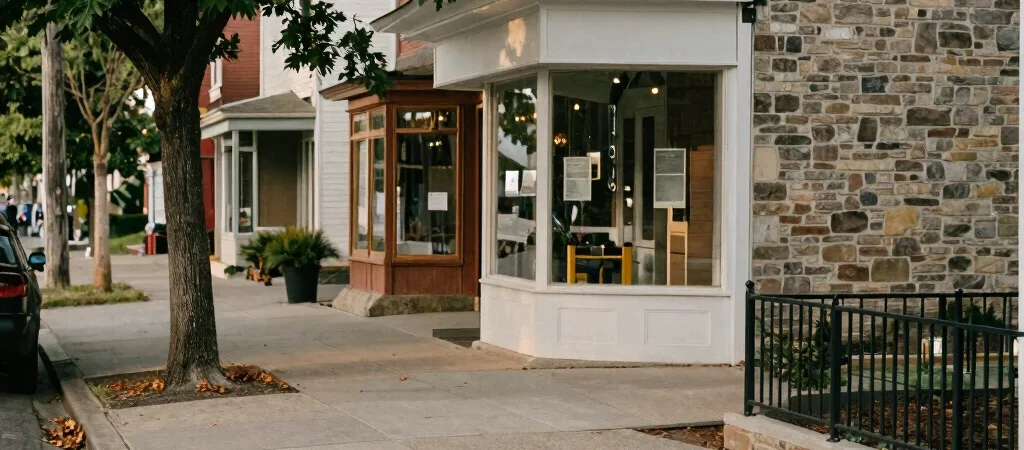
The same block can look different when you are not trying to get anywhere. A walk after lunch, without a podcast or a route to complete, leaves room to notice the cracked edge of a sidewalk, a shop window being rearranged, or the first leaves collecting near a curb. Nothing dramatic has to happen for the walk to feel like time well spent.
Familiarity frees your attention
On a new route, part of your attention goes to directions and crossings. On a familiar one, you already know where the corner narrows and where the light changes, so your mind can wander a little. That is a modest kind of ease, but it can be welcome in a day full of decisions.
The repeated route also makes small changes visible. A planter fills in, a tree loses its leaves, or a familiar storefront goes dark for the evening. These details are easy to miss when the walk is treated only as a way to reach the next thing.
Let the route stay small
There is no need to turn the walk into a challenge or measure it against a longer one. Choose a block that feels comfortable, cross where it is safe, and leave the pace slower than your usual commute. If the weather is poor or the street is busy, a shorter loop is still a walk.
Try repeating the same route once this week with your phone tucked away. You may come back with no grand insight, just a clearer memory of the afternoon. Sometimes that is enough.